Arthritis .Alternative Medicine
Homeopathy may improve pain, joint tenderness, stiffness, and grip strength, especially when used in conjunction with NSAIDs.
Fish oil has been shown to reduce arthritis inflammation, lessen the need for painkillers, and possibly decrease joint stiffness. A diet low in animal and dairy fats may have similar effects. Excellent sources of fish oil include EPA/DHA capsules and oily fish such as salmon and mackerel.
At least a dozen different herbs have been used to ease the symptoms of both osteoarthritis and rheumatoid arthritis; most are considered anti-inflammatories. Ask your doctor about using any herbs, since they can interact with each other or with medication you are taking. In most cases, lack of careful studies means little is known about long-term effects. Herbs that have been used for arthritis are powdered ginger, borage seed oil, or devil's claw to reduce pain and swelling. Stinging nettles or turmeric may also lessen arthritis pain, stiffness, and inflammation.
Ayurvedic medicine uses herbal compounds internally and externally for arthritis symptom relief. Topical curcumin may help relieve the inflammation of rheumatoid arthritis; if taken in capsule form, it can reduce morning stiffness and boost endurance. In one study, a combination of Withania somnifera, Boswellia serrata, and Cucurma longa caused a significant drop in pain and disability for people with osteoarthritis.
At-Home Remedies for Arthritis
Heat and rest - traditional remedies for arthritis pain - are very effective in the short run for most people with the disease. Overweight sufferers should lose weight, especially when arthritis affects the lower back, knees, and legs. Consult a registered dietician who can help you plan a healthy weight-loss program.
In addition to treatments recommended by your doctor, you can use dry heat from a heating pad or moist heat in the form of a hot bath or a hot-water bottle wrapped in a towel to help relieve arthritis pain and stiffness. Regular exercise is important to keep the joints mobile. People with weakened, badly deformed fingers from rheumatoid arthritis benefit from specially designed utensils and door and drawer handles; people suffering weakness in the legs and arms can use special bathroom fixtures, especially tub rails and elevated toilet seats.
Though arthritis is not preventable, many people are able to prevent disability with a well-designed treatment program, including medications, exercise, and physical therapy when needed.
Showing posts with label arthritis. Show all posts
Showing posts with label arthritis. Show all posts
Friday, February 26, 2010

Surgery .Arthritis
Surgery for Arthritis
Various forms of surgery may be needed to reduce the discomfort of arthritis or to restore mobility or joint function. Synovectomy is the removal of damaged connective tissue lining a joint cavity, and allows the body to regenerate new, healthy tissue in its place. This operation is most common in the knee. In cases of severe arthritic damage to the neck or foot, bones can be surgically removed or fused. Although movement is limited after such surgery, the operations relieve excruciating pain and help prevent further damage to nerves or blood vessels.
If arthritis pain and inflammation become truly unbearable, or arthritic joints simply refuse to function, the answer may lie in surgical joint replacement. Today, hip and shoulder joints - as well as smaller joints in elbows, knees, and fingers - can be replaced with reliable artificial joints made of stainless steel and plastic. This type of surgery can dramatically improve function and mobility.
Arthritis Pain Management
Because one of the most trying aspects of this disease is learning to live with arthritis pain, many doctors recommend training in pain management, including cognitive therapy. The National Institutes of Health has found that cognitive behavioral therapy, using education and behavior modification alongside relaxation techniques, is better than routine care for relieving arthritis pain. Such programs focus on improving patients' emotional and psychological well-being by teaching them how to relax and conduct their daily activities at a realistic pace. Learning to overcome mental stress and anxiety can be the key to coping with the physical limitations that may accompany chronic rheumatoid arthritis and osteoarthritis. Cognitive therapy may include various techniques for activity scheduling, imaging, relaxation, distraction, and creative problem-solving.
Alternative Medicine for Arthritis
A variety of alternative therapies are used for arthritis. Let your doctor know if you're considering them.
Some studies suggest that glucosamine and chondroitin supplements are as effective as NSAIDs for reducing pain, swelling, and stiffness in osteoarthritis. Studies in 2001 show some promise that they may slow the progression of osteoarthritis as well. More studies are underway to further investigate this. Typical doses are 1500 mg for glucosamine and 1200 mg for chondroitin daily. Glucosamine can raise blood sugar, so be sure to talk to your doctor before taking it, especially if you have diabetes. The antibiotic doxycycline may also show some potential in delaying the progression of osteoarthritis by inhibiting enzymes that break down cartilage. More research is needed to confirm these results.
The National Institutes of Health considers acupuncture an acceptable alternative treatment for osteoarthritis. Studies have shown that acupuncture helps reduce pain, may significantly lessen the need for painkillers, and can help increase range of motion in affected joints.
Available over-the-counter since 1999, the supplement SAMe has been shown in some studies to be as effective against osteoarthritis pain as NSAIDs, with the added benefit of fewer side effects.
Various forms of surgery may be needed to reduce the discomfort of arthritis or to restore mobility or joint function. Synovectomy is the removal of damaged connective tissue lining a joint cavity, and allows the body to regenerate new, healthy tissue in its place. This operation is most common in the knee. In cases of severe arthritic damage to the neck or foot, bones can be surgically removed or fused. Although movement is limited after such surgery, the operations relieve excruciating pain and help prevent further damage to nerves or blood vessels.
If arthritis pain and inflammation become truly unbearable, or arthritic joints simply refuse to function, the answer may lie in surgical joint replacement. Today, hip and shoulder joints - as well as smaller joints in elbows, knees, and fingers - can be replaced with reliable artificial joints made of stainless steel and plastic. This type of surgery can dramatically improve function and mobility.
Arthritis Pain Management
Because one of the most trying aspects of this disease is learning to live with arthritis pain, many doctors recommend training in pain management, including cognitive therapy. The National Institutes of Health has found that cognitive behavioral therapy, using education and behavior modification alongside relaxation techniques, is better than routine care for relieving arthritis pain. Such programs focus on improving patients' emotional and psychological well-being by teaching them how to relax and conduct their daily activities at a realistic pace. Learning to overcome mental stress and anxiety can be the key to coping with the physical limitations that may accompany chronic rheumatoid arthritis and osteoarthritis. Cognitive therapy may include various techniques for activity scheduling, imaging, relaxation, distraction, and creative problem-solving.
Alternative Medicine for Arthritis
A variety of alternative therapies are used for arthritis. Let your doctor know if you're considering them.
Some studies suggest that glucosamine and chondroitin supplements are as effective as NSAIDs for reducing pain, swelling, and stiffness in osteoarthritis. Studies in 2001 show some promise that they may slow the progression of osteoarthritis as well. More studies are underway to further investigate this. Typical doses are 1500 mg for glucosamine and 1200 mg for chondroitin daily. Glucosamine can raise blood sugar, so be sure to talk to your doctor before taking it, especially if you have diabetes. The antibiotic doxycycline may also show some potential in delaying the progression of osteoarthritis by inhibiting enzymes that break down cartilage. More research is needed to confirm these results.
The National Institutes of Health considers acupuncture an acceptable alternative treatment for osteoarthritis. Studies have shown that acupuncture helps reduce pain, may significantly lessen the need for painkillers, and can help increase range of motion in affected joints.
Available over-the-counter since 1999, the supplement SAMe has been shown in some studies to be as effective against osteoarthritis pain as NSAIDs, with the added benefit of fewer side effects.
Best exercises for knee arthritis

Low-Impact Activities
Being active may also help you lose weight, which takes pressure off joints. Other exercises that are easy on the knees: biking, swimming, and water aerobics. Water exercise takes weight off painful joints. Many community and hospital wellness centers, YMCAs, and pools offer classes for people with arthritis.
Don't give up favorite activities, like golf. Talk to your doctor or physical therapist about modifying painful moves.

Walking
With stiff or sore knees, walking may not seem like a great idea. But it's one of the best exercises for knee arthritis. It can reduce joint pain, strengthen leg muscles, and improve flexibility -- and it's good for your heart. The best part -- no gym membership needed.
Good form is key: Look forward, walk tall. Keep arms and legs moving, relaxed. Always ask your doctor before starting exercise when you have osteoarthritis.

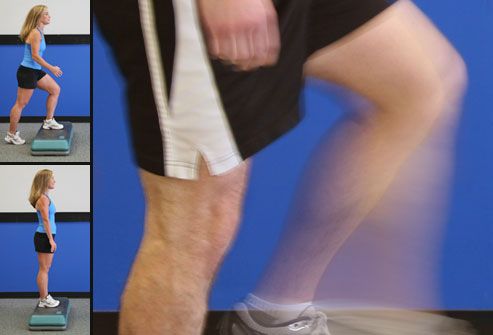
Step Ups
This move helps strengthen your legs for climbing stairs. Face a stable step, both feet on the ground. Step up with your left foot. Follow with your right foot. Stand on top, tall and with both feet flat. Climb down in reverse: right foot down first, then left. Do 10 times. Rest, then repeat another 10 times. Then repeat, starting with right leg first. Too hard? Use a railing, wall, or lamppost for balance. Or try a lower step.


One Leg Balance
Your goal is to do this hands-free. Steady yourself on a chair, if needed. First, shift your body weight to one leg but do not lock your knee straight. Slowly raise the other foot off the ground, balancing on your standing leg. Hold for 20 seconds. Lower raised foot to the ground. Do twice, then switch legs. This move helps when getting out of cars or bending.
Too easy? Balance for a longer time. Or try with your eyes closed.

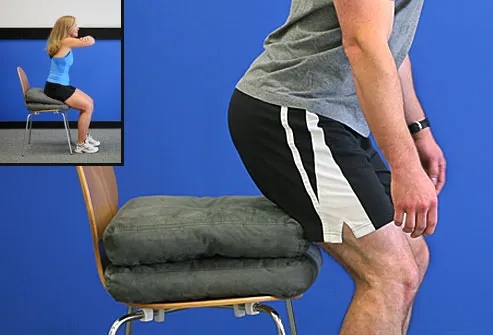
Sit to Stand
Practice this move to make standing easier. Place two pillows on chair. Sit on top, with your back straight, feet flat on floor (see left). Use your leg muscles to slowly and smoothly stand up tall. Then, slowly lower yourself back down to sitting. Be sure your bent knees don’t move forward of your toes. Try with arms crossed (see left) or loose to your side.
Too hard? Add pillows or use a chair with armrests and help push up with your arms.

Side Leg Raise
Hold back of chair for balance. Place your weight on left leg. Lift right leg out to the side. Keep right leg straight and outer leg muscles tensed. Don't slouch. Lower right leg and relax. Repeat 10 times. Rest. Do another 10, then repeat with left leg.
Too hard? Increase leg height over time. After a few workouts, you’ll be able to raise your leg higher.

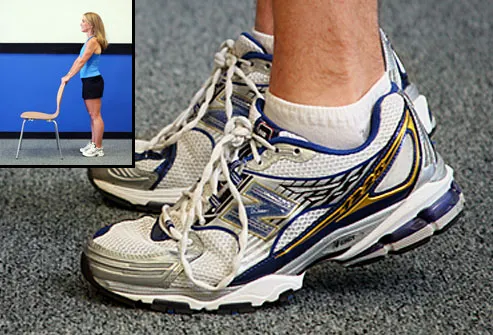
Heel Raise
Hold back of chair for support. Stand straight and tall. Lift heels off ground and rise up on toes of both feet. Hold for five seconds. Slowly lower both heels to ground. Repeat 10 times. Rest. Do another 10.
Too hard? Do the same exercise, only sitting in a chair.

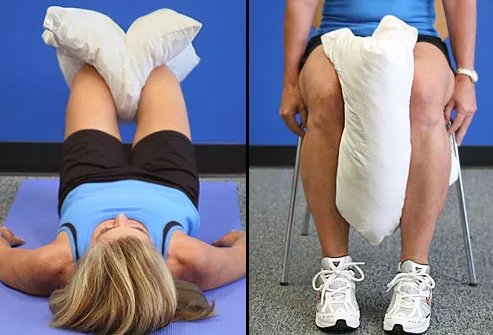
Pillow Squeeze
This move helps strengthen the inside of your legs to help support your knee. Lie on your back, both knees bent. Place a pillow between knees.
Squeeze knees together, squishing pillow between them. Hold for five seconds. Relax. Repeat 10 times. Rest, then do another set of 10.
Too hard? You can also do this exercise while seated. See photo to right.

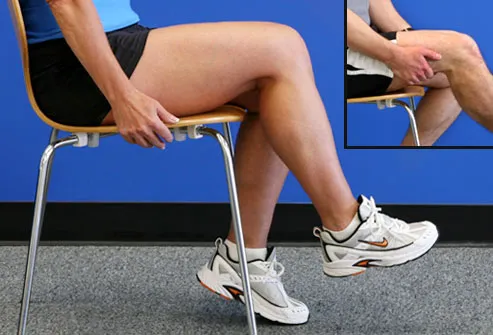
Seated Hip March
This move can strengthen hips and thigh muscles to help with daily activities, such as walking or rising from a chair.
Sit up straight in chair. Slightly kick back your left foot but keep toes on the floor. Lift your right foot off the floor, keeping knee bent. Hold right leg in the air five seconds. Slowly lower your foot to the ground. Repeat 10 times. Rest and do another 10, then switch legs. Too hard? Use your hands to help raise your leg.

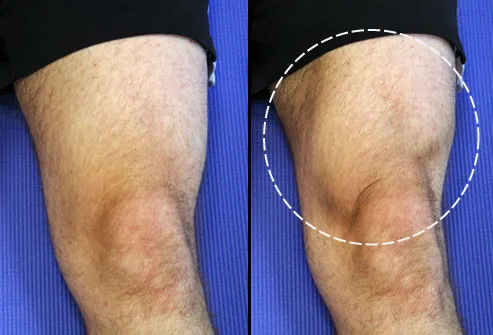
Quad Set
Is the straight leg raise too tough? Do quad sets instead. With these you don’t raise your leg. Simply tighten the thigh muscles, also called the quadriceps, of one leg at a time.
Start by lying on the floor. Keep both legs on ground, relaxed. Flex and hold left leg tense for five seconds, as seen in right-hand photo. Relax. Do two sets of 10. Then, switch to other leg.

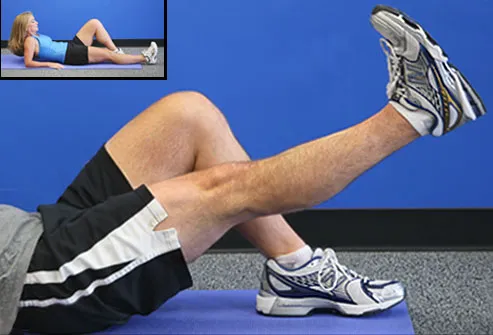
Straight Leg Raise
To try this leg strengthening move, lie on the floor. Prop your back up on your elbows. Bend your left knee, keeping foot on floor. Keep the right leg straight, toes pointed up. Tighten thigh muscles of your right leg. Slowly and smoothly use your thigh muscles -- not your back -- to raise your leg.
Pause, as seen above, for five seconds. With thigh still tight, slowly lower leg to ground. Relax. Repeat 10 times. Rest. Do another 10; then switch legs.

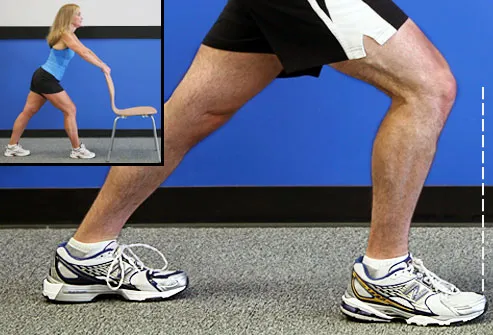
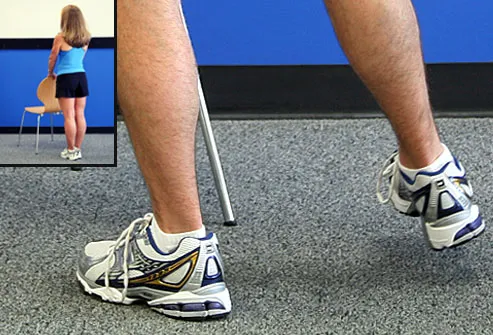
Calf Stretch
Stretching exercises loosen muscles, improve flexibility, and help prevent pain and injury.
Use a chair for balance. Bend your right leg. Step back with left leg, slowly straightening it behind you. Press left heel towards the floor. Feel the stretch in your back leg.
For more of a stretch: Lean forward, bending the right knee deeper. Don't let the right knee go past your toes. Hold for 20 seconds. Do twice, then switch legs.

Hamstring Stretch
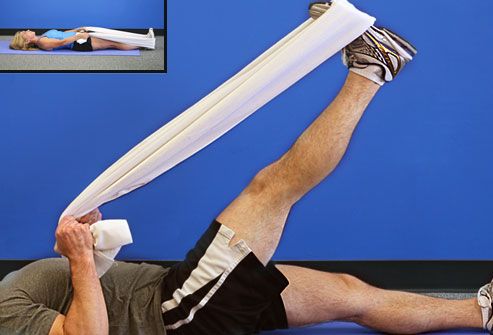
Warm up with a five-minute walk. Then, stretch. Lie down. Loop a bed sheet around your right foot. Use sheet to help pull and stretch leg up. Hold for 20 seconds. Repeat twice, then switch legs. Stretching is one of three important types of exercises for knee OA. Range of motion or stretching exercises keep you limber. Strengthening exercises build muscle strength to stabilize weak joints. Aerobic exercises, like walking, help lung and heart fitness.




How Much Exercise?
Start with a little. If you can do it without pain, do more next time. Aim for 30 minutes a day.
Over time you’ll build your leg muscles to support your knee and increase flexibility.
Some muscle soreness is normal, but hurting or swollen joints need rest. Take a break and ask your doctor’s advice. Ice painful joints and take acetaminophen or an anti-inflammatory pain reliever, like ibuprofen or naproxen, if your doctor says it's OK.
Subscribe to:
Posts (Atom)